The medieval frescoes in the Groß Gievitz church were revealed by a stroke of luck.
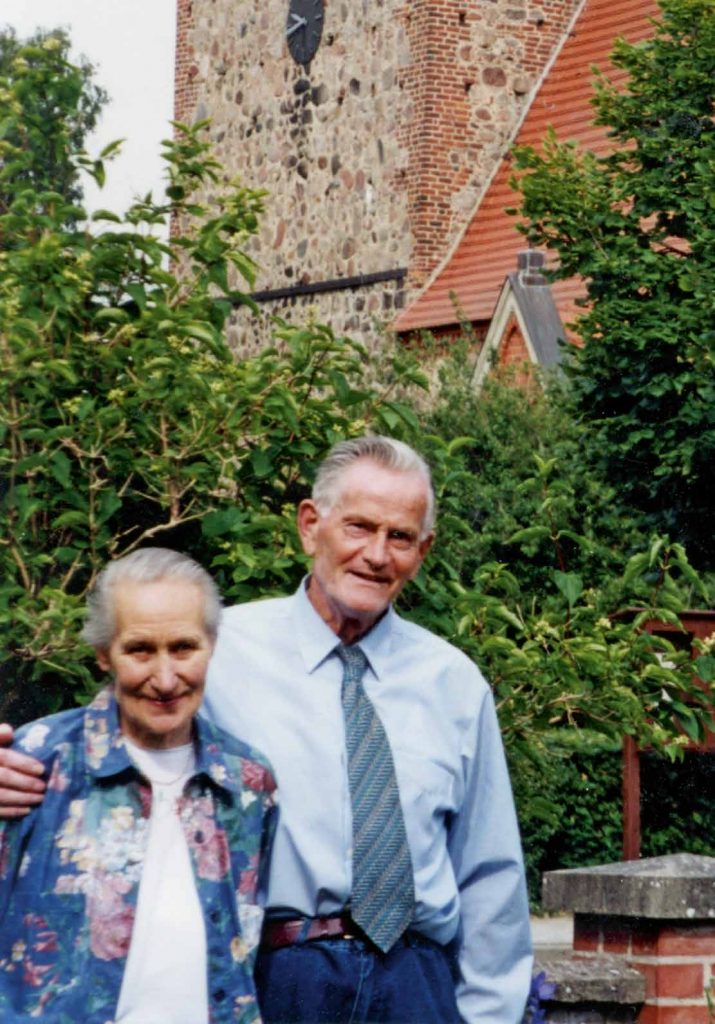
The history of the church in the 20th century is closely linked to Pastor Werner Bollman and his wife Wera, geb. Bennöhr. Without their help, the 13th century frescoes might never have been uncovered. Werner and Wera Bollmann married in 1951.
Before she and her husband went to Groß Gievitz, Wera Bollmann had studied German language and literature, and taught for several months in a village school in Rothenmoor, her place of birth.
Werner Bollmann was pastor in Groß Gievitz from 1953 to 1995. Wera Bollmann taught herself to play the organ and worked as auxiliary organist in Groß Gievitz for many years. She reports that her husband had always had an “eye for buildings” and been interested in architecture. Together they were active in reappraising the history of the church and its frescoes.
As early as 1958, Werner Bollmann discovered a peeling patch of whitewash on one of the church walls and informed the cultural heritage preservation authorities. In an interview in 2021, Wera Bollmann said that at the time all seven family members took
an active interest while the frescoes were being exposed: “We always watched, even the children, from the scaffolding.” In the end, Frau Bollmann had a total of nine children. She is the author of a number of brochures about the stone church and the aristocratic von Voß family.
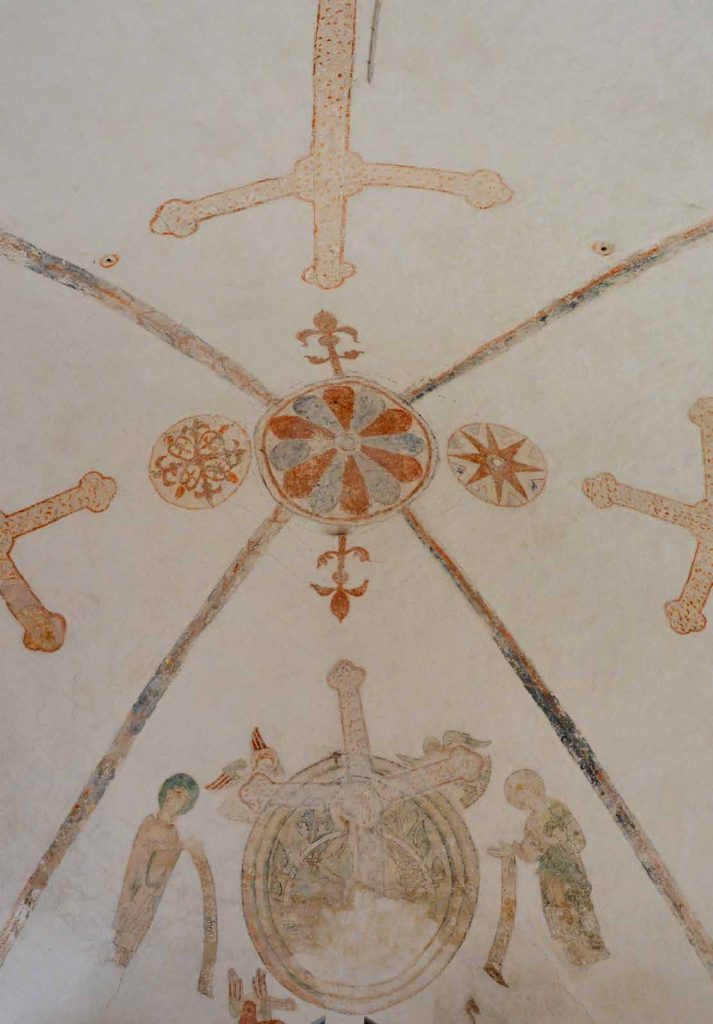
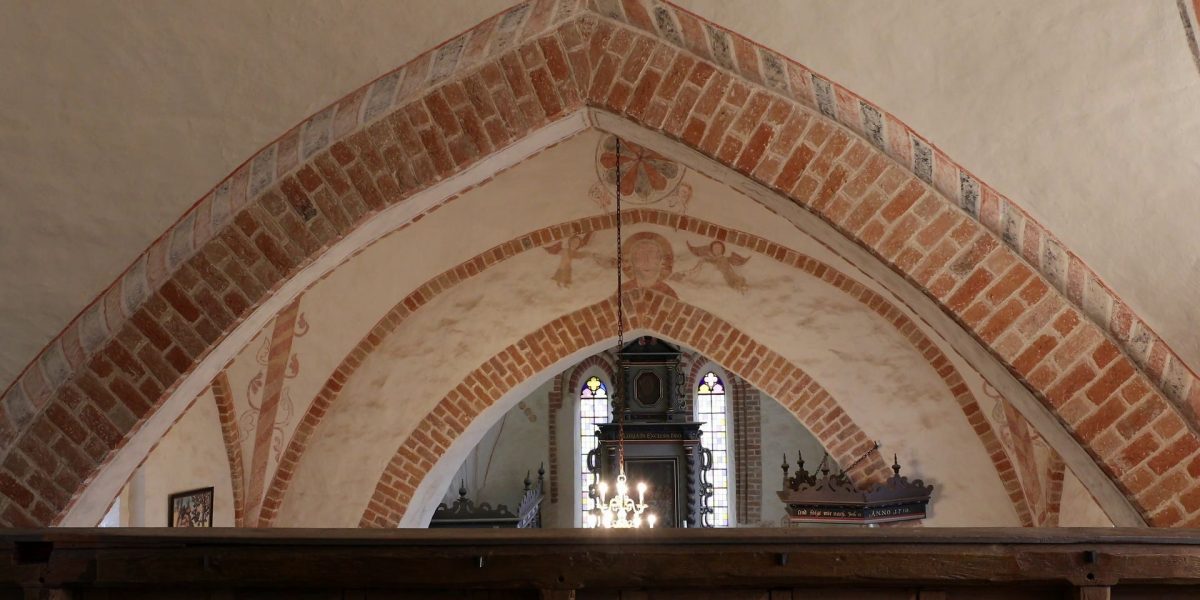
In 1964, under the auspices of the preservation authorities, the medieval frescoes were gradually exposed. What emerged were several religious frescoes that had been painted shortly after the church was built, and thus dated to the 13th century. Those first paintings include not only the four crosses in the chancel vault (the chancel, or choir, is the space that houses the altar)
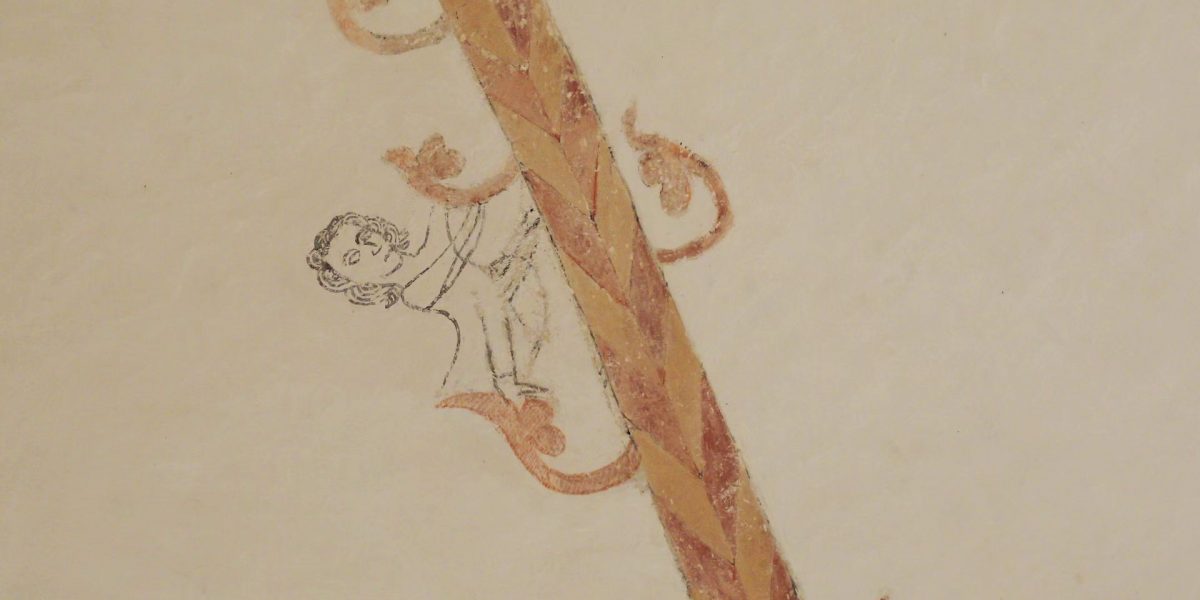
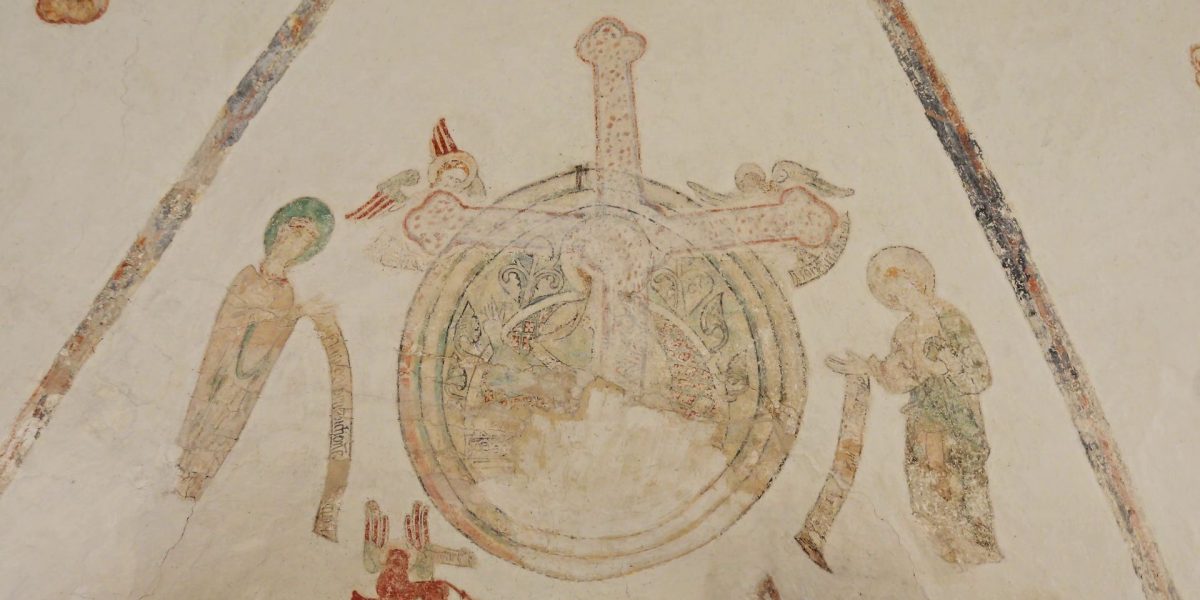
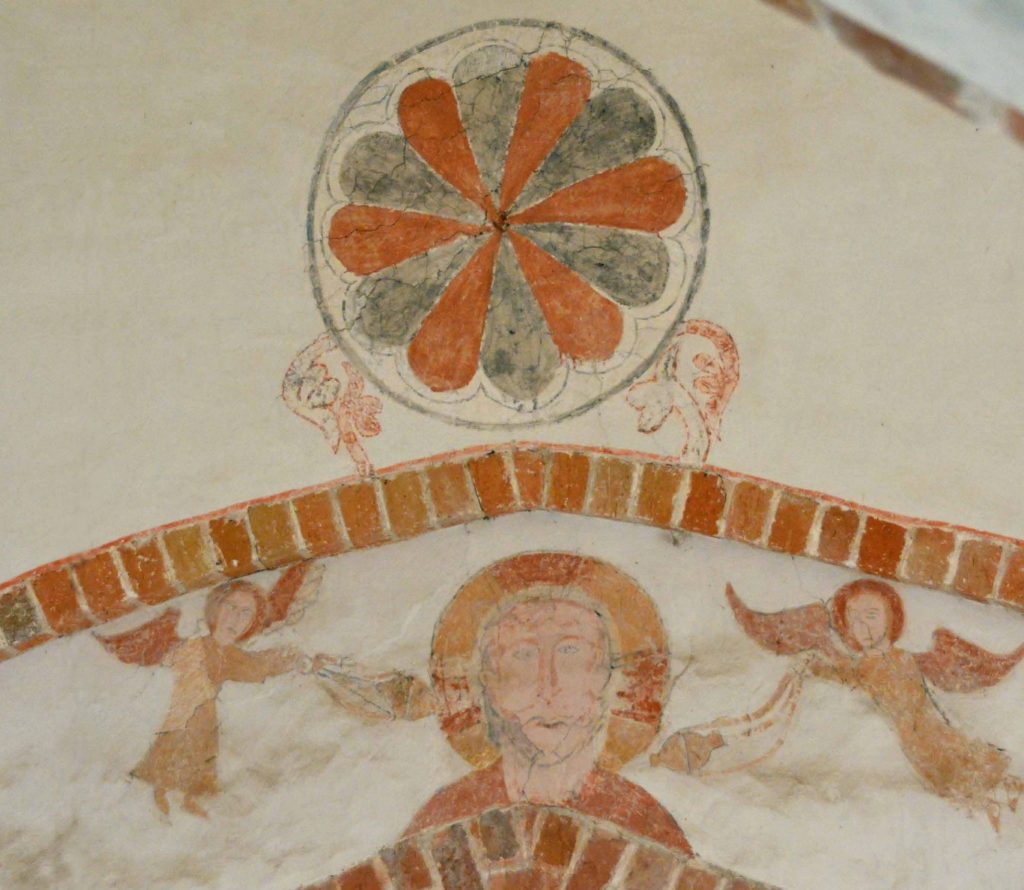
and Christ on the chancel arch, but also fabulous creatures, vines and coloured rosettes. In a second period of painting, which took place a few years later, a crucifixion scene, Christ as judge of the world and a saint, possibly Peter, were added in the curve of the chancel arch.
The frescoes were probably whitewashed over in about 1700 on the orders of Count Ernst Christoph von Voß, as they no longer suited contemporary tastes. The Baroque furnishings of the church also date from that time. The walls were whitewashed again in the mid-19th century.
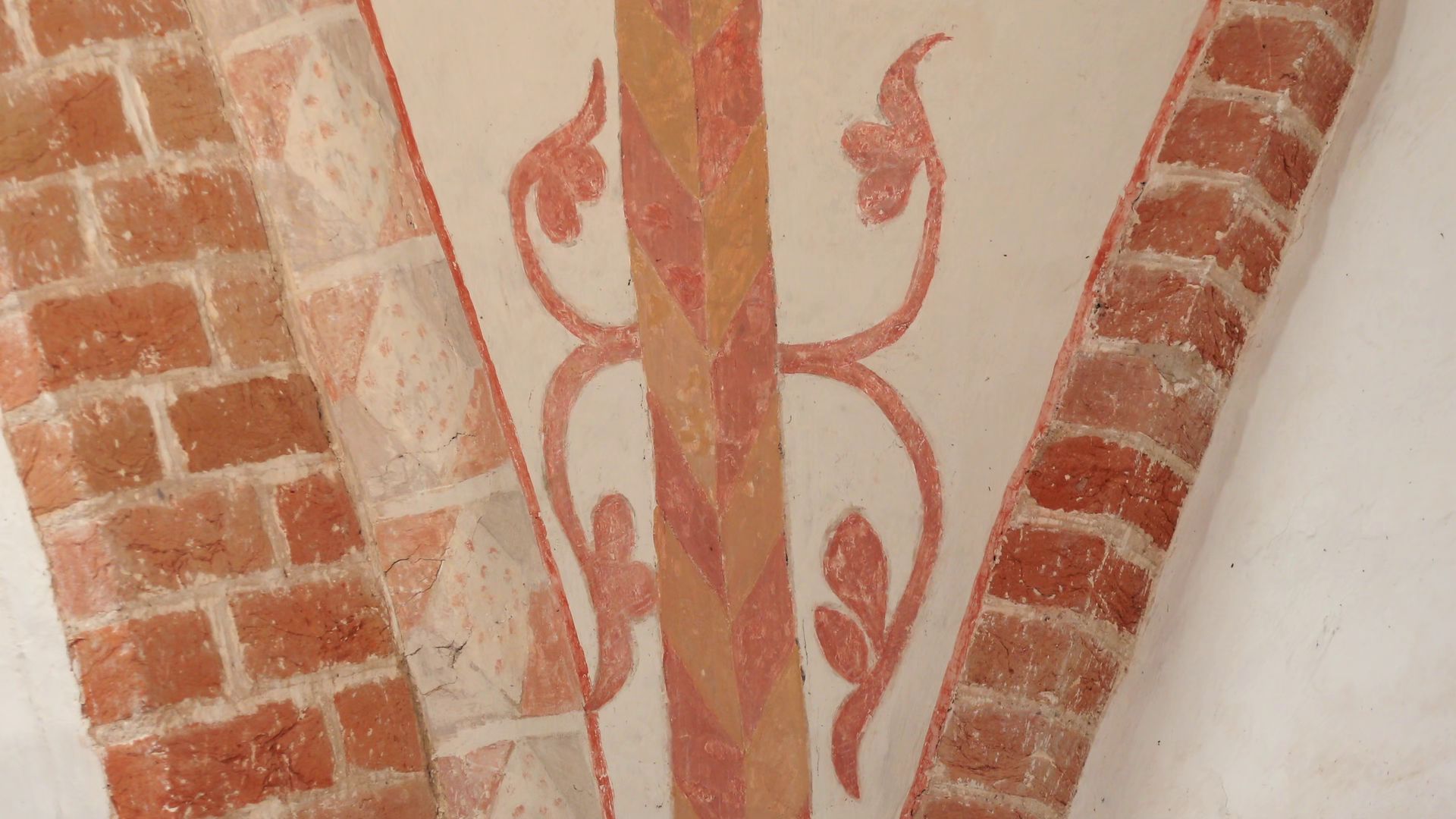
Consecration crosses
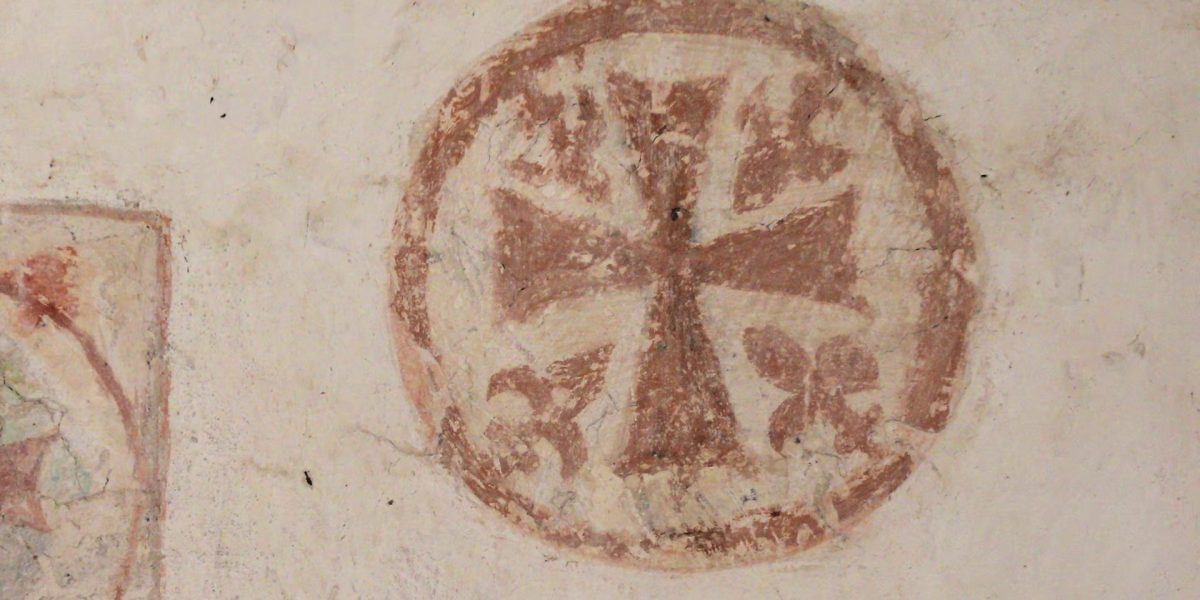
What are called consecration crosses are located in various places in the church. They denote points where churches have been anointed with myrrh and sprinkled with holy water at their consecration; generally there are either twelve (representing the twelve apostles) or fourteen of them
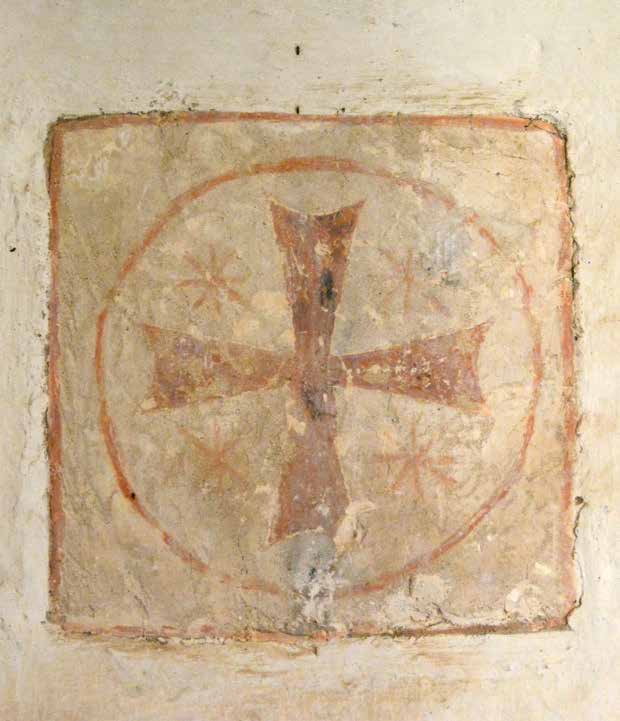
(representing the Stations of the Cross). Not all the consecration crosses here have survived. One is surrounded by lilies; probably a receptacle under it containing items for the sacristy was consecrated later and the cross placed over it.
Christ on the cross with the Evangelists
In the first phase of painting, only the four crosses and ornaments were finished. Later Christ as judge of the world was added, surrounded by his almond-shaped aureole (mandorla). Around him are the symbols of the four Evangelists: at the upper left, an angel (Matthew), at the upper right, an eagle (John), and at the lower left, a lion (Mark). Only a fragment remains of the ox that represents Luke (lower right). Added to them were Mary (left) and John the Baptist as intercessor (right). The sayings on the banners they hold in their hands can unfortunately no longer be deciphered.
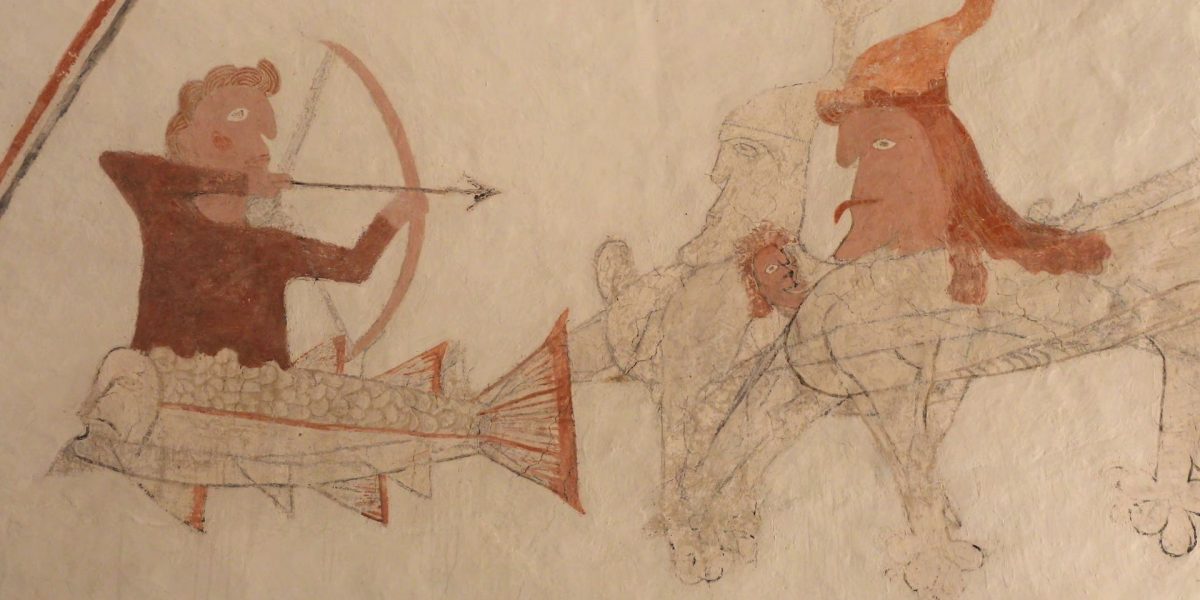
Fish and lion
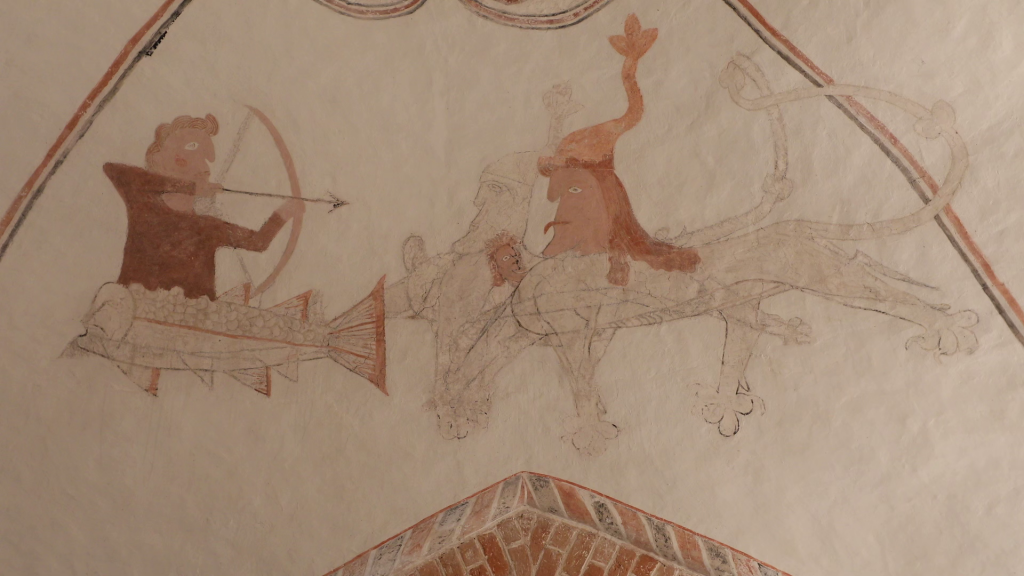
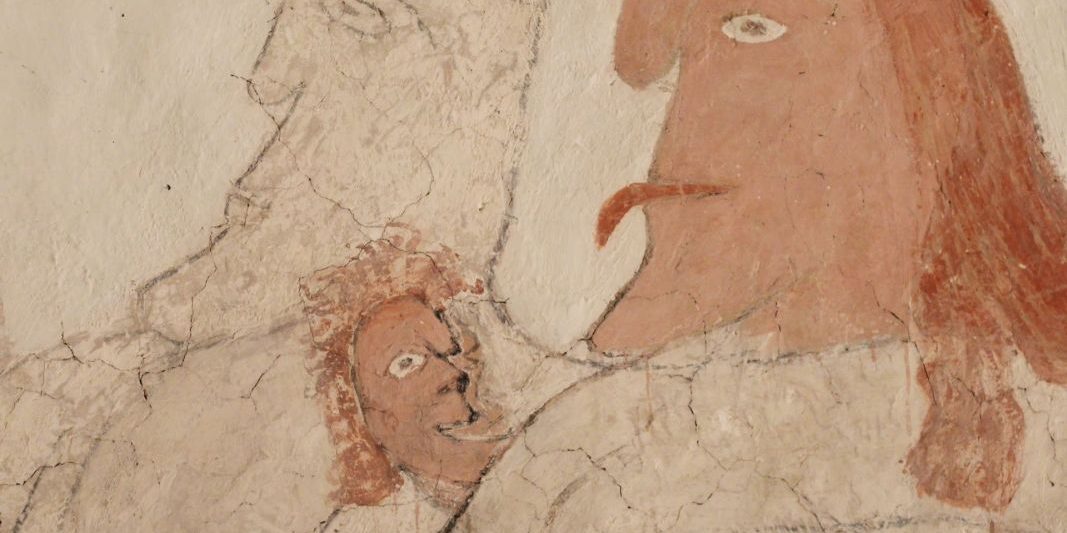
Interpreting this symbolic scene poses the most difficulties. Because the gallery did not exist from the very beginning, so that visitors could look directly at
the church ceiling, the painting probably once had a greater significance than we might attribute to it today.
Presumably a baptised person (on the fish) and the devil (the red-haired lion) are fighting for possession of the small soul that is emerging from the lion’s chest. The lion’s Slavic cap might also indicate the paganism of the local Wendish tribes. What looks like a shadow is an unfinished preliminary sketch.
<- Back | Forth ->(1) Christ on the chancel arch, surrounded by two angels and a twelve-leaf rosette. Picture: Heidi Goerlt.
(2) Detail of a consecration cross, Picture: Heidi Goerlt
(3) Consecration crosses
(4) Detail of the fight scene from the western bay of the nave, Picture: Heidi Goerlt.